


 Share
Share


Introduction to the UAE’s Hope Probe Mission
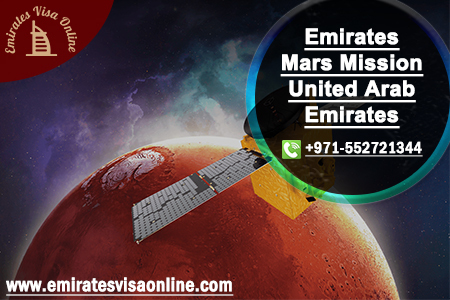
The Hope Probe—known in Arabic as Al-Amal—marks one of the most extraordinary achievements in the history of the United Arab Emirates. As the country’s first interplanetary mission, the Hope Probe entered Mars’ orbit after a remarkable seven-month journey from the Tanegashima Space Centre in Japan. With this success, the UAE became the fifth nation in human history—after the United States, Russia, China, and India—to reach Mars.
The Emirates Mars Mission symbolizes the UAE’s vision for scientific progress, technological leadership, and global collaboration.
What Is the Hope Probe? Detailed Overview
International Collaboration and Development
The Emirates Mars Mission was officially announced in July 2014. It was developed through a strong partnership between:
-
Mohammed bin Rashid Space Centre (MBRSC) – UAE
-
University of Colorado Boulder – USA
-
Arizona State University – USA
-
University of California, Berkeley – USA
This collaboration gave UAE scientists an opportunity to work closely with global experts, enabling world-class research and engineering.
When and How the Probe Was Launched
The Hope Probe was launched in July 2020 aboard a Mitsubishi Heavy Industries H-IIA rocket—its 45th successful launch. The launch timing was crucial since Earth and Mars were at their closest alignment, which reduces travel time and fuel usage.
Instruments and Scientific Payload
To achieve its mission goals, the Hope Probe carries:
-
EXI – Emirates eXploration Imager (high-resolution camera)
-
EMIRS – Emirates Mars Infrared Spectrometer
-
EMUS – Emirates Mars Ultraviolet Spectrometer
These instruments allow scientists to study Mars’ atmosphere across multiple layers and wavelengths.
Why the Hope Probe Was Sent to Mars
Key Scientific Objectives of the Mission
The primary goal of the Hope Probe is to create the first complete picture of Mars’ atmosphere, capturing weather patterns, climate cycles, and atmospheric escape.
Studying Mars’ Atmospheric Loss
For billions of years, Mars has been losing hydrogen and oxygen into space. The Hope Probe monitors:
-
how much of these gases escape
-
how weather conditions affect escape rates
-
why Mars lost its thick atmosphere and liquid water
This research helps understand whether Mars could have once supported life—and whether it could become habitable in the far future.
Mapping Weather Patterns & Climate Cycles
The Probe’s unique elliptical orbit—20,000 to 43,000 km—allows it to give a full atmospheric image every nine days, providing insights into:
-
dust storms
-
temperature changes
-
seasonal cycles
-
atmospheric composition
The mission has already produced the first “true weather satellite view” of the planet.
How the Hope Probe Successfully Entered Mars Orbit
The Mars Orbit Insertion Maneuver Explained
Entering Mars orbit required one of the most complex maneuvers ever attempted. As the Hope Probe approached Mars at 120,000 km/h, it performed a 27-minute braking burn using its six Delta-V thrusters.
This slowed the spacecraft enough to be captured by Mars’ gravity.
Because Mars is 190 million km from Earth, the confirmation signal took 11 minutes to reach mission control.
With this, the UAE accomplished what many nations take decades to achieve.
Scientific Discoveries and Progress as of 2026
New Atmospheric Data and Insights
By 2026, the Hope Probe has delivered groundbreaking data, including:
-
Detailed mapping of hydrogen and oxygen escape rates
-
Temperature variations across multiple atmospheric layers
-
Full-planet images showing weather transitions
-
Seasonal patterns influencing atmospheric structure
Contribution to Global Mars Research
The UAE shares Hope Probe data openly with the world’s scientific community, making it one of the most transparent interplanetary missions. This supports future missions from NASA, ESA, China, and private space organizations.
Impact of the Emirates Mars Mission on the UAE
Boost to UAE’s Space & Technology Sector
The mission has accelerated the UAE’s growth in:
-
aerospace engineering
-
advanced sciences
-
research & technology
-
international collaboration
Inspiring the Next Generation of Emirati Scientists
One of the mission’s goals is to inspire young Emiratis to pursue STEM careers. Scholarships, research programs, and internships have grown significantly since the mission’s launch.
How to Apply for an Emirates Visa to Visit the UAE (2026 Guide)
Step-by-Step Application Process
-
Choose your visa type – 14-day, 30-day, 60-day, transit, or multi-entry.
-
Prepare required documents – passport copy, photograph, and travel details.
-
Submit your visa application online through Emirates Visa.
-
Pay the visa fees securely.
-
Receive approval in your email after processing.
-
Download your Emirates Visa and present it at the airport upon arrival.
Always apply early to avoid last-minute delays.
Why Apply Through Emirates Visa – Safety, Reliability & Fast Approval
Choosing professional support ensures:
-
Faster approvals
-
Zero documentation errors
-
Dedicated support
-
Secured data handling
-
High success rate
Avoiding unverified third-party agents prevents risks such as fraudulent applications, rejected visas, and misuse of documents.
Apply confidently through Emirates Visa for a smooth, trusted, and secure process.
Conclusion
The UAE’s Hope Probe is more than a mission—it is a symbol of ambition, innovation, and global scientific contribution. As the Emirates continues to rise as a spacefaring nation, it welcomes millions of travelers, professionals, and explorers each year.
Whether you're planning a holiday, business trip, or extended stay, securing your Emirates Visa is the first step toward experiencing the UAE’s futuristic vision, culture, and opportunities.
Start your Emirates Visa application today and explore a nation reaching for the stars.
Comments
0